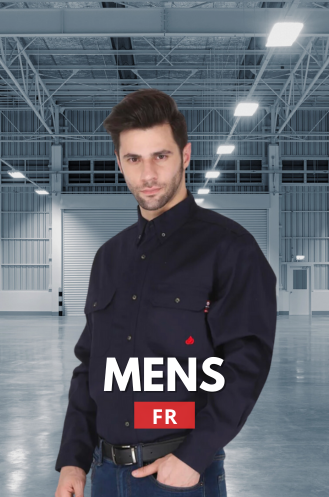

FR clothing for industrial workers is essential when the job involves flash fires, electrical arcs or other sudden heat. It resists ignition and stops burning once the flame is gone. That shortens the time a garment burns against the skin.
This article covers how flame resistant clothing works, what happens without it, and how employers can buy it wisely. It is written for safety managers, employers, and procurement teams. Each section gives the short answer first.
What Is FR Clothing and How Does It Protect Industrial Workers?
FR clothing is workwear that resists catching fire and stops burning when the flame source is removed. Ordinary cotton can keep burning. Many synthetic fabrics melt and stick to the skin.
Flame resistant clothing gets this ability from fibers that are flame resistant by nature, or from fabrics treated with a flame retardant. When heat hits, the fabric chars instead of feeding the fire. In certain incidents, that can lower the severity of a burn. It cannot stop every injury, and it does not protect against every hazard.
Buyers often mix up FR and arc-rated. The two are related, but they are not the same. An arc rating tells you how much thermal energy a garment can take during an arc flash. Some FR apparel carries that rating, and some does not.
|
Type |
What it does |
Best for |
|
Ordinary workwear |
May ignite and keep burning |
Jobs with no heat or flame hazard |
|
FR clothing |
Resists ignition and self-extinguishes |
Flash fire and flame exposure |
|
Arc-rated FR clothing |
Carries a tested arc rating |
Electrical work with arc flash risk |
Most FR clothing for industrial workers belongs in the last two rows.
Why Is FR Clothing Important in Industrial Workplaces?
Some industrial tasks release heat in a split second, and ordinary clothes cannot cope with that. A shirt that keeps burning can turn a bad injury into a much worse one.
Whether your site needs it depends on its hazards, and a hazard assessment gives you that answer. Check current OSHA rules and standards such as NFPA 2112 and NFPA 70E at the same time.
Common high-risk settings include:
- Oil and gas sites, where flash fires can happen
- Electrical work near live equipment, where arc flash is possible
- Welding and cutting, where sparks and hot metal can ignite clothing
- Plants that handle combustible dust or vapors
Two workers on the same site may need different garments. Industrial FR clothing should follow the risk of each role, not a blanket rule. Hazards also shift when a site adds equipment or changes a process, so the assessment needs a fresh look at that point.

What Are the Benefits of FR Clothing, and What Are the Risks Without It?
The main benefit of FR clothing is lower burn severity in certain incidents. Skipping it raises the chance of serious injury and creates compliance and business problems.
Comfort is a benefit that people often overlook. Newer FR apparel uses lighter fabrics and better cuts. Workers who like what they wear keep it on and wear it correctly. That helps the whole safety program.
Without suitable FR workwear, workers face more exposure to burns. Employers may also face compliance gaps, work stoppages after an incident and investigation costs. Employee confidence can drop when people feel unprotected.
Which FR outerwear suits industrial work? Browse our FR vest and jacket collection for certified, durable protection against flash fires and arc hazards.
Keep the limits in mind, too. Flame resistant clothing is only one layer of defense. Training, safe procedures and engineering controls still carry a large share of the load.
How Does FR Clothing Affect Business Costs and Productivity?
FR clothing affects costs through downtime, replacement spending and purchasing habits. The right garments can support productivity, but no result is guaranteed.
Comfort plays a part. FR workwear that pinches or overheats pulls attention away from the task. Good sizing, free movement and fabric that suits the climate cut down on those distractions. That is one reason FR clothing for industrial workers should always be tested in real conditions.
Watch these cost factors:
- Incident downtime: A serious injury can halt a crew, a shift or an entire site.
- Replacement costs: Worn or damaged garments must be replaced on time.
- Purchasing consistency: One approved style makes reorders easy.
- Inventory planning: A clear size mix prevents shortages.
- Long-term value: Durable FR apparel can cost less per month of use.
Compare total cost, not just the price tag. A cheap garment that wears out in six months can cost more over a year. Treat industrial FR clothing as a planned purchase.

How Can Employers Build an Effective FR Clothing Program?
An effective FR clothing program starts with a hazard assessment and ends with regular review. Garment choice, training and care sit in between.
Begin with each job role. Strong FR clothing for industrial workers rests on facts about the work, not on price. Next, list the standards that apply, such as OSHA requirements, NFPA 2112, NFPA 70E and ASTM garment specifications. Confirm the current versions before you decide.
Then write down garment specifications. Cover fabric, weight, arc rating and fit. Think about layering as well. Underlayers should not melt or ignite beneath an FR shirt.
Train employees to wear, wash and inspect their FR workwear. Follow the maker’s care instructions, because poor laundering can weaken flame resistant clothing over time.
Finally, review the program on a set schedule and after any incident or change in work. Name one owner, such as the safety manager, and keep written records. A written industrial FR clothing program makes audits and reorders much easier.
How Do You Choose the Right FR Clothing for Your Workforce?
Match each garment to the hazards of the job first. After that, check fabric, fit, durability, documentation and bulk-order support.
Use this checklist when you compare products:
- Hazards: Match each garment to the risks of the role.
- Fabric and construction: Check weight, weave and seams.
- Comfort: Think about heat, cold and freedom of movement.
- Durability: Ask how the garment holds up to wear and washing.
- Documentation: Confirm labels, certifications and ratings.
- Sizing: Look for a wide size range.
- Bulk orders: Confirm stock, delivery and reorder options.
Pick one or two approved styles for each role. Test samples with real workers before you place a large order. If a shirt feels wrong in the first hour, it will feel worse by hour eight.
Complete your team’s FR workwear with flame-resistant pants made for oil and gas, electrical, and manufacturing environments.
Ask suppliers for written specifications. Also confirm that the same style will be available when you reorder. Good industrial FR clothing should stay consistent from one order to the next.
Forge FR Online offers FR workwear for industrial teams. Visit Forge FR Online to explore FR apparel and compare each product’s documented specifications with your hazard assessment. Do this before you buy FR clothing for industrial workers in bulk.
What Are the Most Common Questions About FR Clothing?
1. Does every industrial worker need FR clothing?
No. Only workers exposed to thermal hazards need it, and a hazard assessment shows who they are.
2. Does FR clothing prevent all burn injuries?
No. Flame resistant clothing can reduce burn severity in some incidents, but it cannot stop every injury.
3. What is the difference between FR clothing and arc-rated clothing?
FR clothing resists ignition and burning. Arc-rated clothing also carries a tested rating for arc flash energy.
4. How should employers choose FR workwear for different job roles?
Match each role’s hazards to garments with documented ratings. Then check fit and comfort.
5. How often should an FR clothing program be reviewed?
Review it on a set schedule, such as once a year, and after any incident or process change.
Ready to equip your team? Explore FR clothing for industrial workers at Forge FR Online and match each garment to your site’s hazards and standards.
Follow us on Instagram for FR gear care tips, industrial safety insights, workplace protection advice, and the latest FR workwear updates.