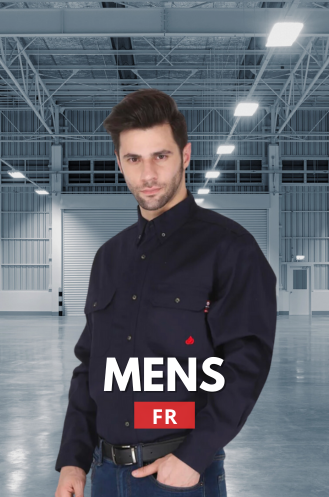


To ensure human safety in diverse FR scenarios, it is necessary to wear FR Resistant Clothing. For all kinds of employment, outdoor activities, and emergencies, FR Resistant Clothing is needed.
It's important to understand FR Resistant Clothing, whether you work in an industrial setting, like outdoor activities, or just want to be prepared for emergencies.
What do you mean by FR Resistant Clothing?
Clothing that has been carefully constructed to resist FR or self-extinguish when exposed to flames is known as FR Resistant Clothing. When there is a chance of FR, this kind of clothing can lessen the chance of burns.If the fabric catches FR, it will come to an end once the heat source is removed. It reduces the risk of injury and provides the wearer with crucial escape time.
But keep in mind that flame resistance is not equal to FRproofness. Any FR Resistant Clothing will burn if it is heated for an extended length of time.
How Does FR Resistant Clothing Function?
The purpose of FR resistance Clothing is to stop burning by using particular materials and production processes. FR Resistant Clothing achieves its protective qualities primarily through two mechanisms:
1. Flame-Retardant Treatments: Materials coated with FR-resistant chemicals can be used to make FR Resistant Clothing. These substances are added to the fabric either during the manufacturing process or in later treatments.
They function by changing the chemical composition of the fabric to either set out FR instantly or drastically slow down the burning process. This delay lessens the chance and severity of burn injuries by giving the user critical seconds to respond and get away from the FR source.
2. Inherent FR Resistance: Certain materials used to make FR-resistant clothing naturally resist FR. When exposed to heat or FR, these materials do not easily catch FR because they are inherently non-flammable. Polyester fibers such as Nomex and Kevlar, together with specific varieties of treated wool, are examples.
Advantages of FR Resistant Clothing
1. Reduced Burn Injuries: The use of FR Resistant Clothing reduces the possibility and intensity of injuries from burns by stopping or delaying clothing explosions.
2. Increased Safety: It improves people's overall safety by adding an essential layer of protection in scenarios where exposure to heat or flames is possible.
3. Follow Safety Standards: FR Resistant Clothing meets strict industry norms and regulations, guaranteeing that workplaces follow safety procedures and reduce hazards.
4. Long-term Cost Efficiency: FR Resistant Clothing provides long-term benefits by lowering medical expenditures related to burn injuries and eliminating lost productivity as a result of injury, even after initial investment costs.
5. Versatility: For a range of industries and activities, it comes in a variety of styles and materials that ensure protection and comfort without sacrificing functionality.
Conclusion
People who live in high-risk areas for FRs might need to wear FR Resistant Clothing. Clothes use modern materials and production techniques to improve safety and lower the risk of burn damage. Because of its strength, adaptability, and strict safety measures, it is a dependable option in many industries.
It is important to wear clothing that is resistant to FR since it can save lives and improve working conditions. It also shows that one is prepared for difficulties and careful of possible hazards.
FAQ
Q.1 Can you wash FR Resistant Clothing?
Ans. It is possible to wash FR resistant clothes, but it is crucial to adhere to the manufacturer's guidelines. Cloth softeners and bleach might lessen the FR resistance of the cloth; therefore, stay away from them.
Q.2 Is FR FR retardant?
Ans. It is true that FR (FR Resistant) clothing can prevent FRs. The device can either withstand complete ignition or retard the combustion, giving more time to remove the clothing or escape from the FR source.
Q.3 How to make FR clothing?
Ans. FR clothing is made by spraying fabrics with flame-retardant chemicals during the production process or by using materials like aramid fibers, which are naturally non-flammable. By using these techniques, burn injuries are reduced, and the clothing is guaranteed not to catch FR.
Q.4 How to tell if clothing is FR-resistant?
Ans. Check the manufacturer's requirements or the label to find out if the apparel is FR-resistant. When a garment is labelled "FR" (FR Resistant) or "NFPA compliant," it means it meets FR safety regulations.