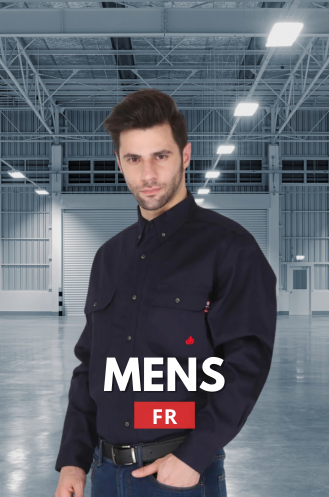


There is a question that comes up a lot among workers who wear FR gear every day. If the clothing is lighter, is it actually doing its job? It seems like a fair concern. Heavier fabric feels more substantial. It feels like it is doing more. So when someone hands you a shirt or a pair of pants that feels almost like regular workwear, the doubt creeps in naturally.
The short answer is no -lighter does not automatically mean less protected. But that answer comes with context. And that context is worth understanding before you spend money on lightweight fire retardant clothing or dismiss it because it does not feel heavy enough.
Where the Assumption Comes From
The idea that heavier FR gear equals better protection is not random. It comes from how older FR workwear was built. The original flame-resistant fabrics were thick, dense, and uncomfortable. They held up well under extreme conditions, but wearing them through an eight-hour shift in summer heat was genuinely miserable.
Workers dealt with it because they had to. But the association stuck -heavy means safe, light means a compromise somewhere.
What changed is the fabric technology. Modern lightweight fire retardant clothing is built using materials and weaves that were not available twenty years ago. The protection does not come from packing more material onto the body. It comes from how the individual fibres are engineered to respond to heat and flame.
What Actually Determines Protection in FR Clothing
The weight of the fabric is not what makes it flame-resistant. The protection comes from the fibre itself -either inherently FR fibres that are flame resistant at a molecular level, or treated FR fabric where the base material has been chemically processed to resist ignition.
What determines whether lightweight fire retardant clothing actually protects you is:
- The arc rating is measured in cal/cm²
- Compliance with NFPA 2112 for flash fire protection
- Compliance with NFPA 70E for electrical arc flash
- Whether the fabric is inherent FR or treated FR
- How the garment is constructed -seams, closures, fit
A lightweight garment with a solid arc rating and NFPA certification protects you. A heavy garment with no certification does not. Weight is a physical property. Protection is a tested and verified quality. The two are not the same thing.
Inherent FR vs Treated FR in Lightweight Options
This distinction matters a lot when you are looking at lightweight fire retardant clothing specifically.
Inherent FR fabrics -like Nomex and modacrylic blends -are flame resistant because of what they are made from. The protection is built into the fibre structure. It does not wash out. It does not degrade with repeated laundering. These fabrics are often lighter because the protection does not depend on added chemical treatments or extra layers of material.
Treated FR fabrics start with a base fibre -often cotton -that has been chemically treated to resist flame. These can also be lightweight. The thing to watch with treated FR is that over many wash cycles, the treatment can degrade if the garment is not cared for properly. They need to be washed according to the manufacturer's instructions to maintain their rating.
Both types can be used in lightweight fire retardant clothing. Knowing which one you are buying helps you understand what maintenance it needs to stay effective.
Where Lightweight FR Clothing Actually Makes Sense
Not every job involves standing in front of a blast furnace. A lot of FR-required work happens in conditions where heat stress is a genuine concern alongside flame hazard. Outdoor pipeline work in summer. Electrical maintenance in poorly ventilated industrial spaces. Petrochemical operations in hot climates.
In these environments, heavy FR gear creates its own problem. Workers overheat. They get fatigued faster. And when gear is genuinely uncomfortable, people find ways to avoid wearing it properly. That is a safety problem that does not show up on the label of the garment but absolutely affects outcomes on the job.
Lightweight fire retardant clothing solves the wearability problem without creating a protection gap -as long as the ratings and certifications are in place. A worker who is comfortable in their FR gear and wears it consistently is better protected than one who leaves the heavy stuff in the truck on warm days.
What to Check Before Buying Lightweight FR Gear
Lighter fabric can sometimes be used as a cover for FR clothing that has not been properly tested or certified. That is the actual risk -not that lighter fabric inherently protects less, but that the market has products that use lightweight as a selling point while cutting corners on the certification side.
Before buying lightweight fire retardant clothing, check for:
- Clear arc rating in cal/cm² printed on the label or product page
- NFPA 2112 certification for flash fire environments
- NFPA 70E compliance if you work around electrical hazards
- UL certification, where applicable
- Fabric type -inherent FR or treated FR, and what that means for maintenance
- Seam and closure construction -these areas fail first under thermal stress
If a product is marketed as lightweight FR but the listing does not show a specific arc rating or certification standard, that is a gap worth questioning before purchase.
The Comfort Argument Is Actually a Safety Argument
This part does not get enough attention. When lightweight fire retardant clothing fits well, breathes properly, and does not make the wearer miserable through a ten-hour shift, it gets worn. Every day. Without shortcuts.
That consistency is where the real protection lives. FR gear that sits in a locker because it is too hot or too stiff does nothing for the person it was supposed to protect. Lightweight options that meet the same certification standards remove the excuse for inconsistent wear.
So the question is not really whether lighter weight means less protection. The better question is whether the specific garment you are looking at carries the right ratings for your job. If it does, the weight is a comfort benefit -not a safety compromise.
Final Thought
Lightweight fire retardant clothing has earned its place in serious industrial workwear. The technology has moved forward enough that weight and protection are genuinely separate conversations now. What has not changed is the need to verify the ratings and certifications before trusting any garment with your safety.
Check the label. Read the certification. Know your arc rating requirement. And if a lighter option meets those marks, wear it comfortably -because that is exactly what it was designed for.
Explore high-quality FR workwear and protective clothing at Forge FR Online for reliable safety gear built for demanding job environments.
FAQ
Q1. Does lightweight fire retardant clothing have the same arc rating as heavier FR gear?
It can, yes. Arc rating depends on the fabric technology and construction, not the weight. Always check the cal/cm² rating on the specific garment.
Q2. Is lightweight FR clothing suitable for welding work?
Some lightweight options are rated for welding environments. Check for NFPA 2112 compliance and make sure the arc rating matches your welding application.
Q3. Does lightweight fire retardant clothing shrink more after washing?
Shrinkage depends on the fabric type, not the weight. Pre-washed FR garments shrink less. Check the care label and size up slightly if the product notes potential shrinkage.
Q4. Can lightweight FR clothing be layered in cold weather?
Yes. Layering FR-rated base layers under lightweight fire retardant clothing keeps you warm without breaking the protection chain. Just make sure all layers are FR rated -non-FR layers underneath can still cause burns.
Q5. How do I know if my lightweight FR clothing is losing its protection?
Check for visible wear, fading of the FR treatment marker if present, contamination that does not wash out, and any physical damage to the fabric or seams. When in doubt, replace it.
Stay safe at work. Learn if lightweight FR clothing offers real protection. Like and follow us on Instagram for more safety tips and updates.