
Money goes into fabric, testing, and certification - that's the short answer. A regular cotton shirt never has to survive an arc flash or a sudden flare-up, but FR clothes are built specifically for that moment, and building for that moment changes the entire cost structure behind the garment.
Why Is FR Clothes So Expensive Compared to Regular Workwear?
Fabric is where most of the cost sits. FR clothes rely on fibers that are either naturally flame-resistant or treated through a chemical process, and neither option is cheap to produce at scale.
A plain uniform shirt skips almost every step FR clothes go through before reaching a store shelf. No flame testing. No certification paperwork. No third-party lab checking whether the seams hold up under heat.
Here's where the extra cost usually comes from:
- Flame-resistant fiber sourcing
- Repeated safety testing on every production batch
- Certification and compliance paperwork
- Shorter production runs compared to regular clothing lines
- Stitching designed not to melt or drip
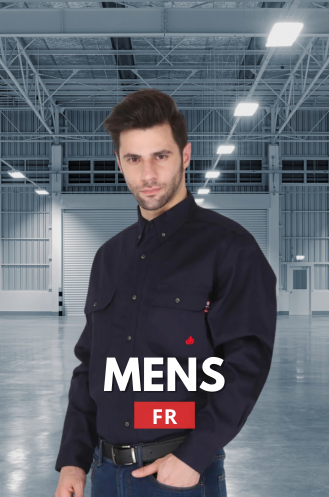
Explore our collection of premium FR shirts designed for comfort, durability, and workplace safety, and find the right fit for your industry.
What Makes FR Clothes Cost More Than Fire Retardant Clothing Coatings?
Because the protection is woven into the fiber itself, not applied as a surface coating. Some cheaper fire retardant clothing relies on a chemical spray that sits on top of the fabric, and that spray wears off with washing.
Manufacturers building genuine FR clothes spend heavily on fiber research so the protection lasts for the garment's entire life, not just the first few months. That research bill eventually lands on the price tag.
A sprayed-on treatment might feel like a bargain at first. Wash it thirty times, though, and the protection is often gone before the fabric even looks worn out.
How Does Fabric Quality Affect FR Clothes Pricing?
Better fabric costs more, plain and simple, and that's why FR clothes sit above cheaper flame resistant clothing options on price. Premium fibers need more careful sourcing than standard textile blends.
Good flame resistant clothing uses tightly woven material engineered to self-extinguish rather than keep burning. Manufacturers who skip that engineering step usually produce garments that fail lab testing outright.
|
Fabric Grade |
Typical Price Range |
Protection Level |
|
Basic treated cotton |
Low |
Fades with repeated washing |
|
Inherent FR blend |
Mid to high |
Holds protection long-term |
|
Arc-rated heavy-duty fabric |
High |
Built for industrial-grade risk |
Why Do Certifications Add to the Price of FR Clothes?
Because every single batch of FR clothes has to clear independent lab testing before it can be sold as flame resistant clothing at all. Skipping this step isn't legally an option for a serious manufacturer.
NFPA 2112 and ASTM standards call for burn testing, arc ratings, and durability checks - and these tests get repeated regularly, not just once. One failed batch means rework, retesting, and more cost passed down the chain.
Buyers across industrial hubs like Jaipur, Vadodara, and Chennai often end up paying a premium specifically for gear that carries this kind of certified fire retardant clothing backing.
Does Brand Reputation Affect the Cost of FR Clothes?
Yes, and this one's fairly straightforward. Established brands charge more for FR clothes because their quality control process rarely slips, and their after-sales support actually exists when something goes wrong.
Smaller or unverified sellers sometimes list flame resistant clothing at prices that look too good to pass up. Often the savings come from cutting corners on testing, and that's a gamble nobody should take with fire-safety gear.
Before buying, it helps to check:
- Certification documents straight from the manufacturer
- Feedback from other industrial buyers, not just star ratings
- A clear warranty or replacement policy
- Batch testing records, if the seller can provide them

Are Expensive![]() FR Clothes Worth the Investment?
FR Clothes Worth the Investment?
Usually, yes. An injury caused by inadequate protection costs far more than the price difference between cheap and reliable FR clothes ever could. Cheap fire retardant clothing that fails mid-incident defeats its entire purpose in one moment.
Workers wearing dependable flame resistant clothing daily also tend to replace it less often. Stronger fabric survives more wash cycles, so the higher price upfront often balances out within a year or two.
Where Can You Buy Quality FR Clothes at a Fair Price?
Specialized manufacturers, not general workwear suppliers, tend to offer the best value on quality FR clothes. Sellers who focus purely on flame resistant clothing usually give clearer answers about certification and fabric sourcing too.
Forge FR is worth a look for anyone hunting for dependable FR clothes that hold up to real safety standards without unnecessary markup.
Frequently Asked Questions
1. Why are FR clothes more expensive than regular clothes?
They use specialized fire-resistant fabric and go through safety certifications that regular clothing never requires.
2. Does washing FR clothes reduce their protection?
Poor washing habits weaken FR clothes faster, though fiber-based garments hold up far longer than coated ones.
3. Is cheap flame resistant clothing safe to use?
Not always - cheaper options often skip certification testing, which can compromise real fire protection.
4. How long do FR clothes usually last?
Most last through 50 to 100 washes when cared for correctly and kept away from contaminants.
5. Are all fire retardant clothing brands certified?
No. Always check for labels like NFPA 2112 before trusting any fire retardant clothing brand.
Follow us on Instagram for FR gear care tips, industrial safety insights, workplace protection advice, and the latest FR workwear updates.